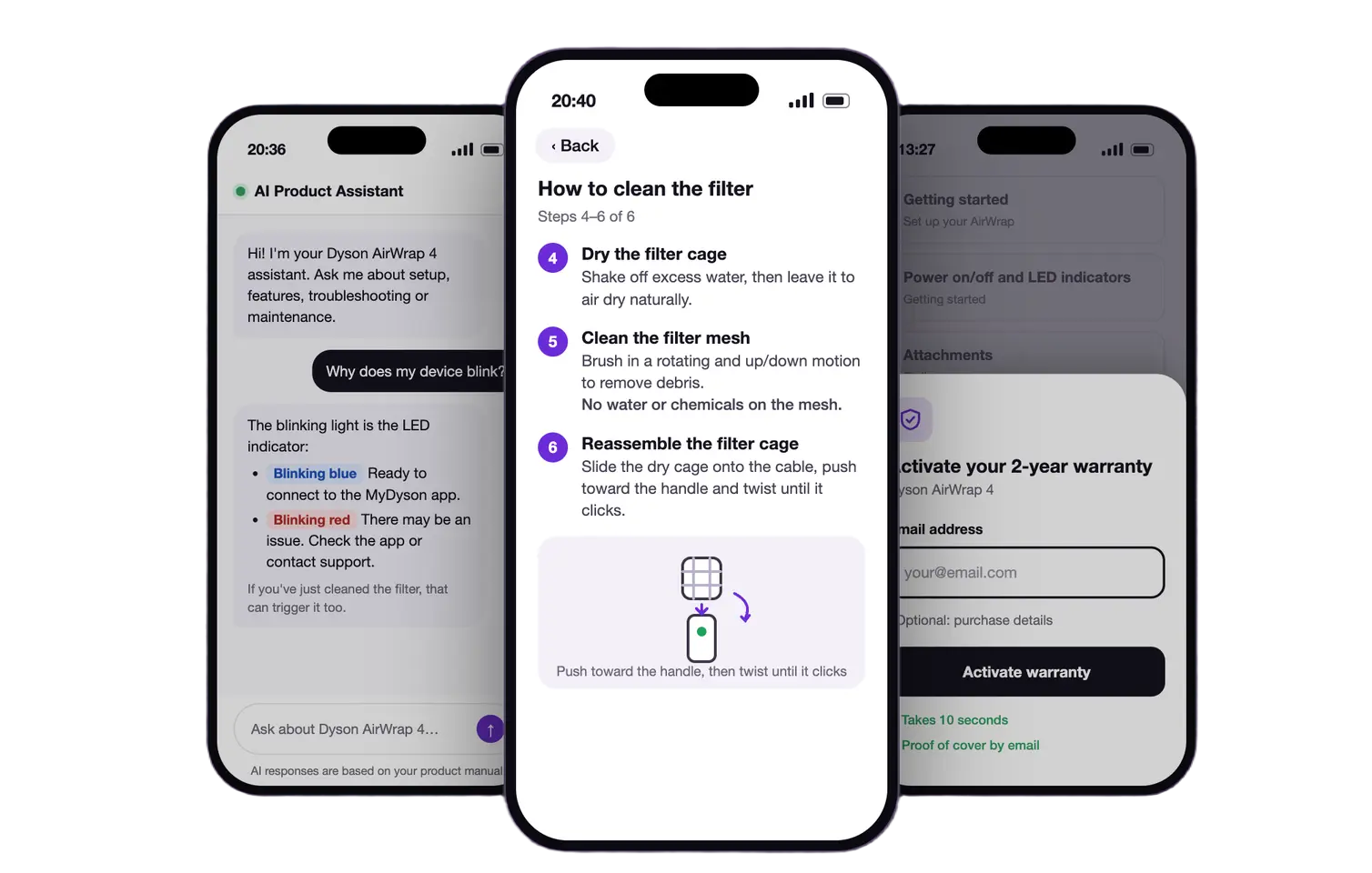
Smart packaging, connected.
One QR code replaces every paper insert in the box — and turns every product into a data capture point. 59% of consumers scan QR codes daily. The question isn't whether they'll scan. It's what they'll find when they do.
Step 1 of 5
See the experience behind the packaging.
Give customers clear, product-specific steps for setup and first use, right when they need them.
Industry research
Sources: NRF · Parks Associates (smart-home devices; setup rated ‘very difficult’)
Getting started
Airwell air purifier
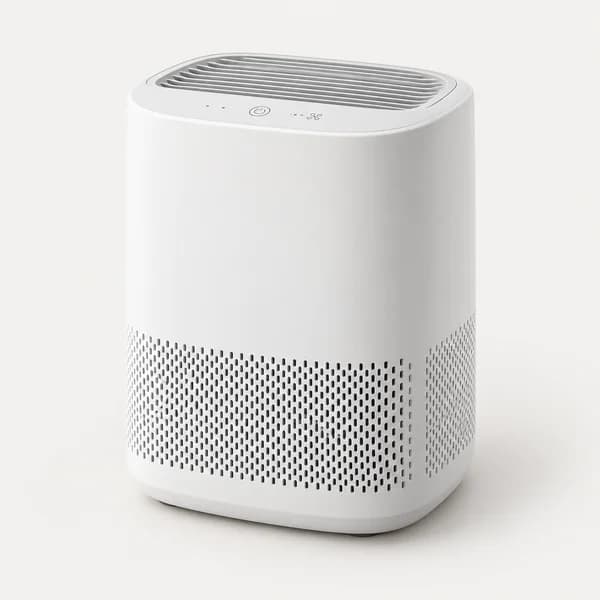
Unpack the filter
With the purifier unplugged, open the rear cover and remove the protective packaging from the filter. Refit the filter and close the cover.
- One code connects customers to everything their product needs.
- 1QR
- Guides, registration, support, emails, and product information.
- 5in 1
- No app to download. Customers scan and open their product page.
- 0apps
Replace six paper inserts with one code.
Setup guide, warranty, AI support, DPP, and direct marketing — from a single scan.
Zero marginal cost per unit.
A QR code printed on your packaging costs effectively nothing. Veribl replaces $0.30–$0.80 of per-unit print costs while adding capabilities paper can never deliver.
Every product feature, one tap away.
Setup guide, warranty registration, AI support, spare parts, care instructions — all from a single scan. Consumers get a complete product experience without hunting for the right insert.
EU compliance included.
The same QR satisfies ESPR Digital Product Passport requirements. No separate compliance infrastructure needed — your smart packaging is your compliance layer.
A brand touchpoint in every box.
The unboxing moment is your best chance to build a direct relationship.
Turn anonymous buyers into known customers.
59% of consumers scan QR codes on packaging. When they scan yours, they land in a branded experience that registers their warranty, captures their email, and starts a direct relationship — even if they bought from a retailer who gave you zero data.
Register your product
Activate your warranty and get support
Know exactly who scans and what they do.
Track scan volume, registration conversion, support interactions, and marketing engagement — all from the same QR code. Understand which packaging copy drives the most scans and optimise accordingly.
Frequently asked questions
See the experience that makes your brand loved
Book a demo