
Textile digital product passport example: a live T-shirt, field by field
A real, working passport for a cotton T-shirt. See what a shopper sees after scanning, what each field means and which rule asks for it, and the same passport in the UN machine-readable format.
What a shopper sees after scanning
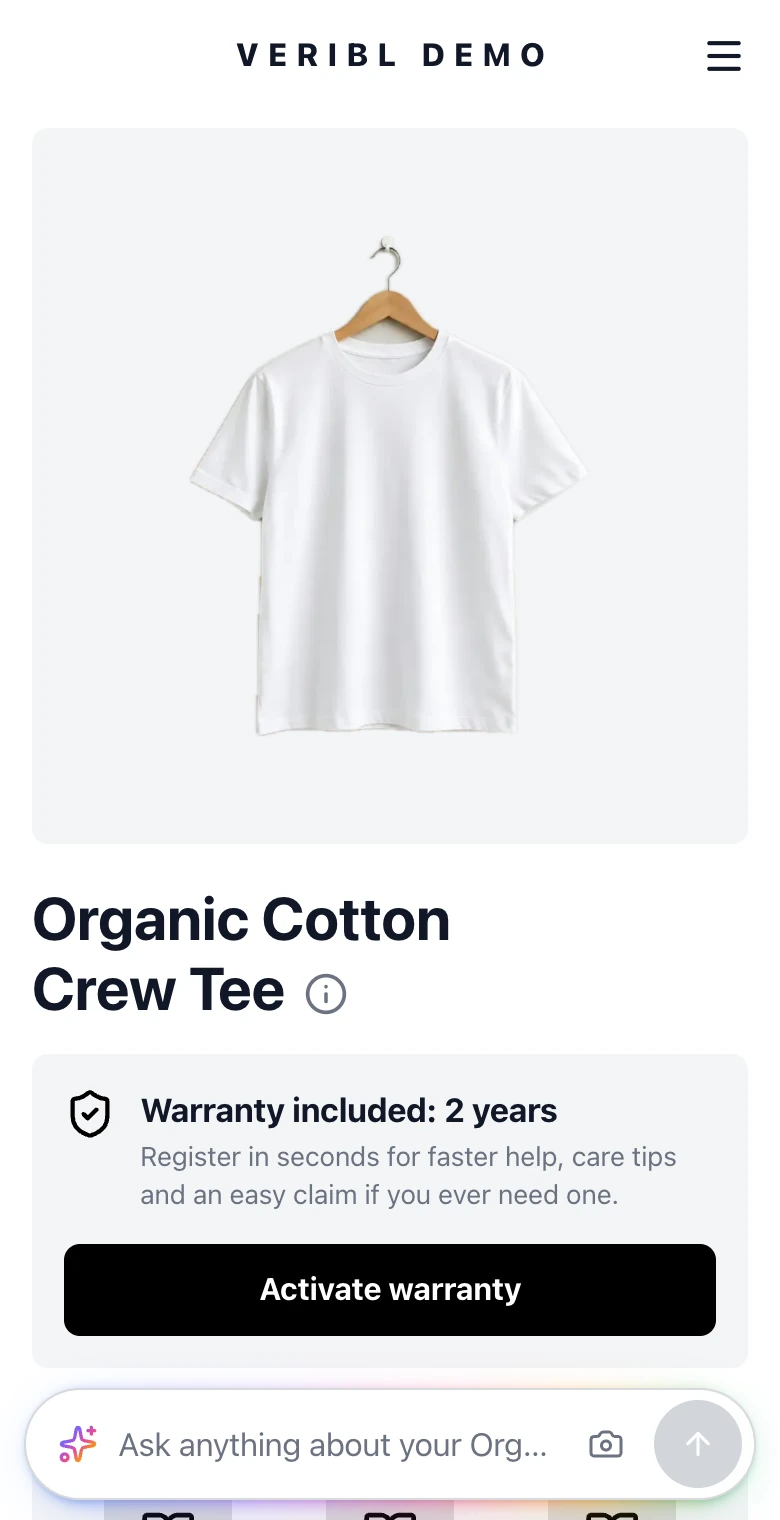
These are screenshots of the live passport of a Veribl demo product, the Organic Cotton Crew Tee, not mockups. The QR code on the care label or hang tag opens the product page, and the passport is one tap away.
1Scan the QR code on the label. The product page opens, no app needed.
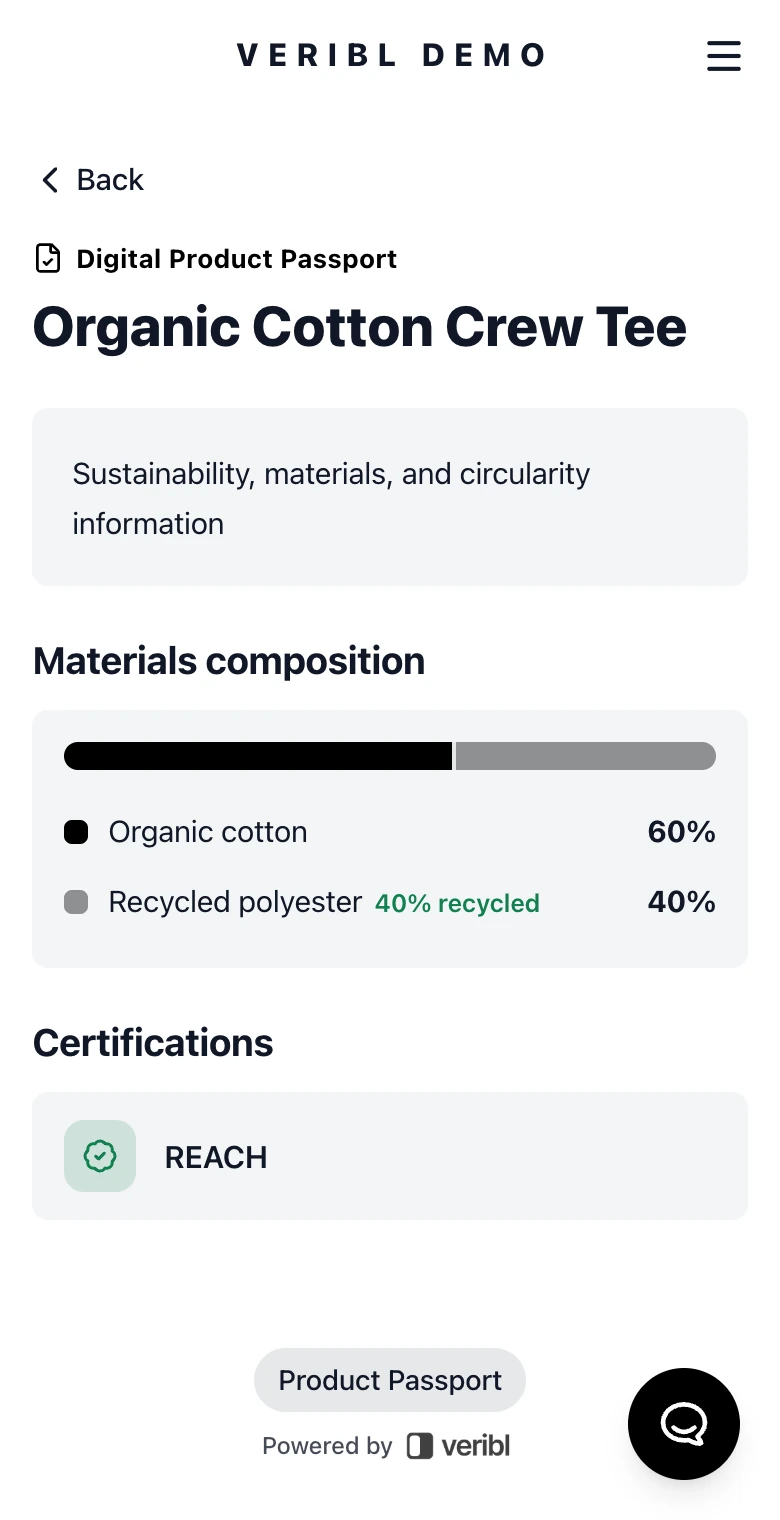
2The Digital Product Passport: materials and declarations.
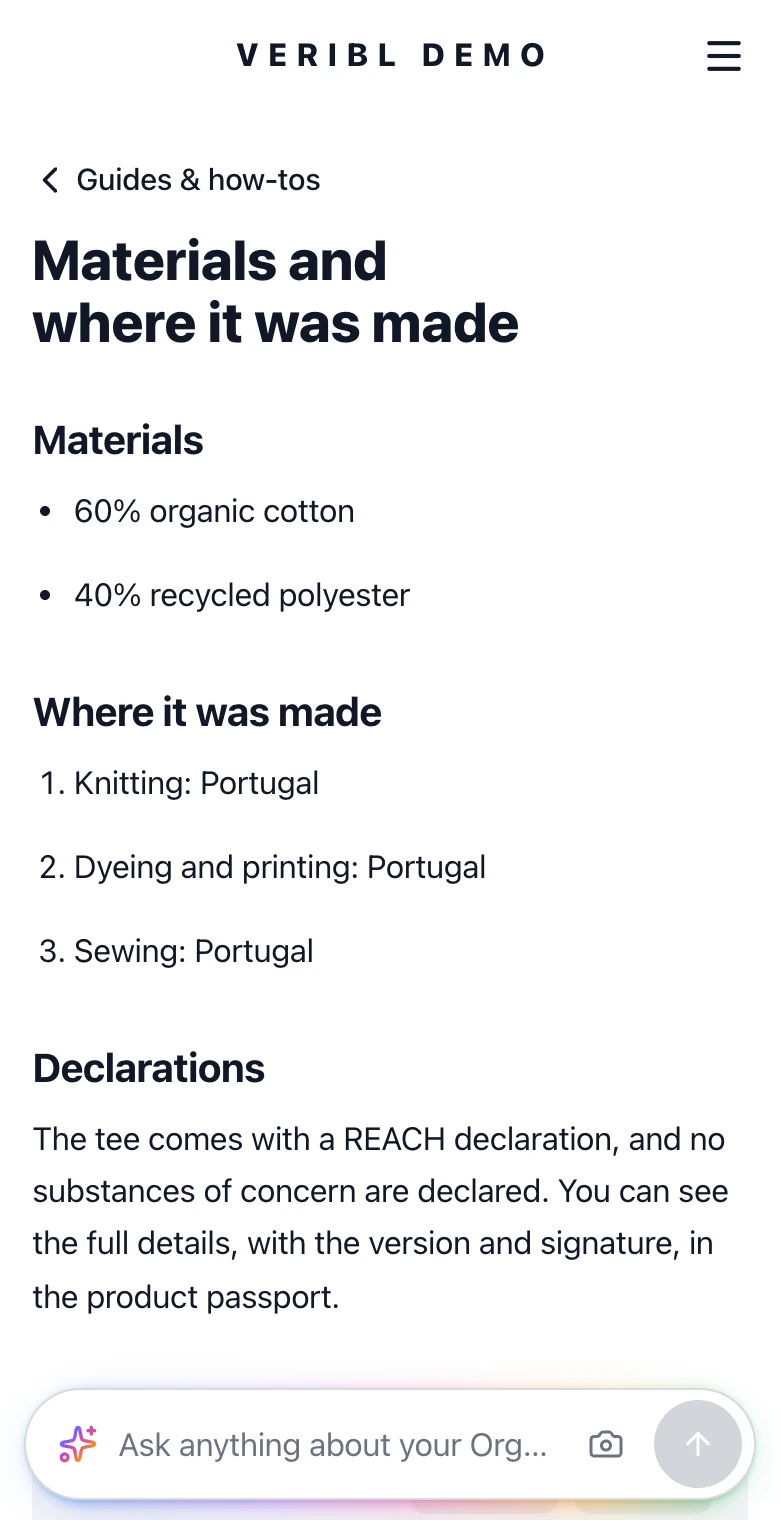
3Materials and the country of each production step.
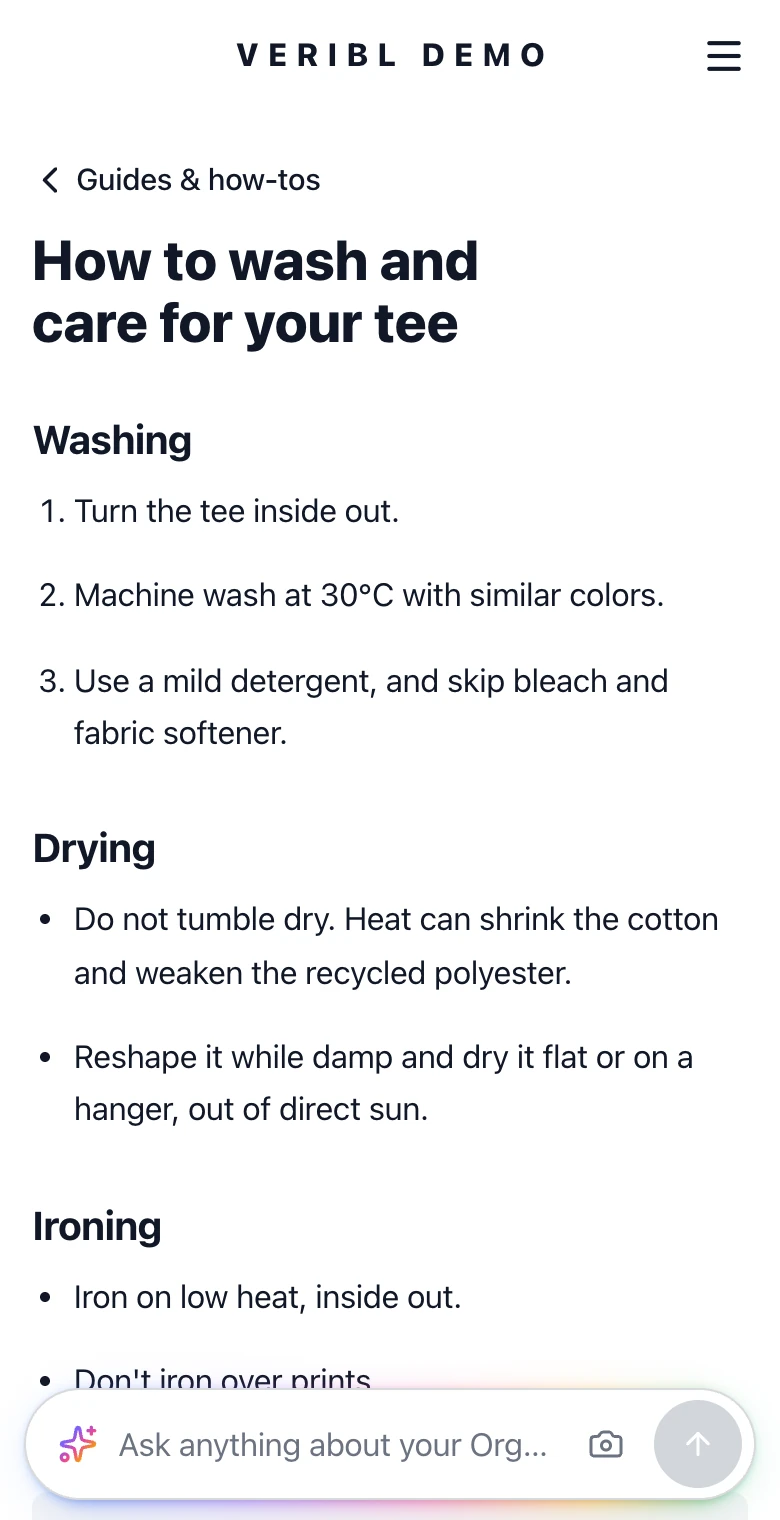
4Care instructions, so the garment lasts longer.
Field by field: what it is and which rule asks for it
The EU textile passport isn't required yet: its delegated act is planned for 2027 and applies at least 18 months later. But part of what it will hold is already law. The labels show which.
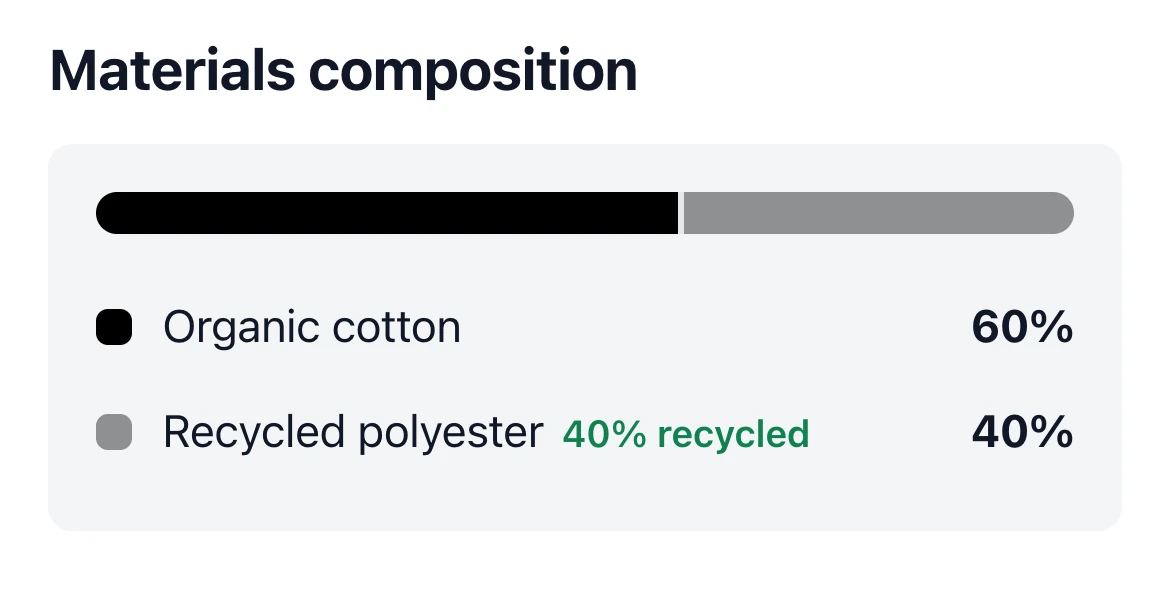
Materials composition
EU law todayRequired in FranceExpected in the passportEach fibre and its share of the garment by weight: 60% organic cotton, 40% polyester. The green note is the recycled share of that material, so 40% of the polyester is made from recycled fibre.
Which rule: Fibre names and percentages are required on the label today by the Textile Labelling Regulation (EU) 1007/2011. Recycled content is required in France under the AGEC law and is expected in the EU passport.
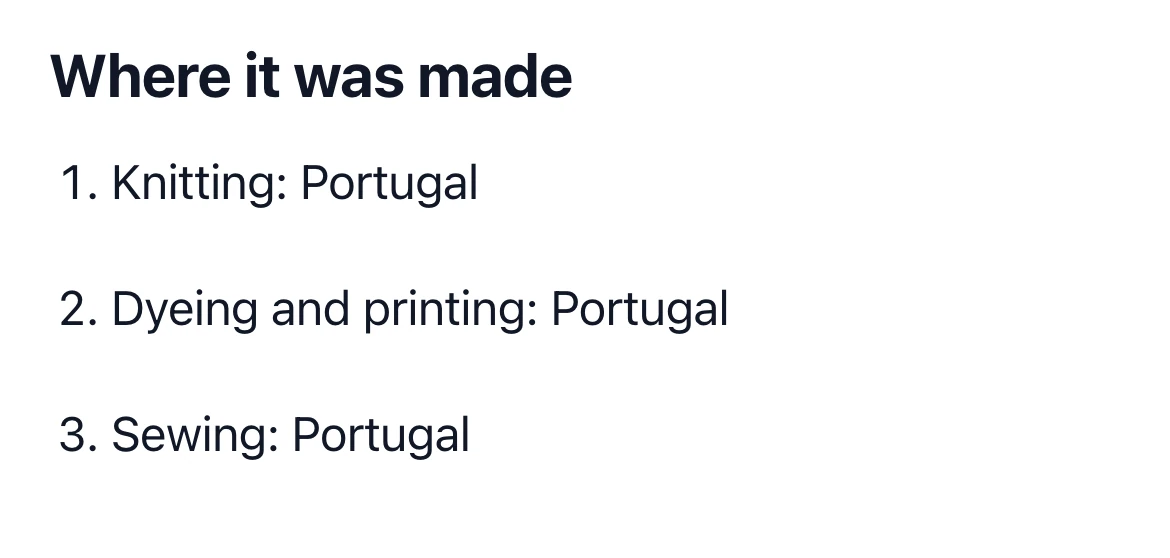
Where it was made
Required in FranceExpected in the passportThe country of each production step: knitting, dyeing and printing, and sewing. Here all three happened in Portugal.
Which rule: France’s AGEC law asks covered brands for the countries of weaving or knitting, dyeing and making. Where each step took place is also expected in the EU textile passport.
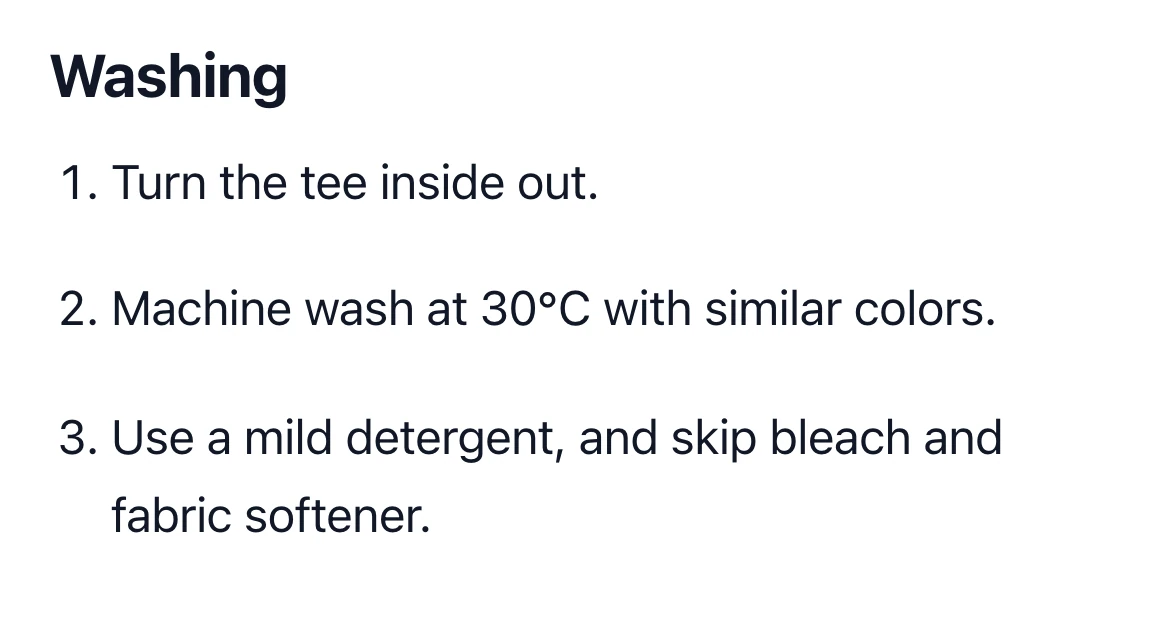
Care instructions
Expected in the passportHow to wash, dry and iron the tee. Good care is the cheapest way to make a garment last.
Which rule: Care symbols are voluntary in the EU. Care and durability information is expected in the passport, and it’s what shoppers look for most after buying.

Declarations and certificates
EU law todayExpected in the passportThe brand’s REACH declaration: no substances of very high concern are declared for this product. Certificates such as GOTS or GRS appear in the same list.
Which rule: Under REACH (EC) 1907/2006, Article 33, suppliers must tell buyers about substances of very high concern above 0.1% by weight. Substances of concern are expected in the passport.
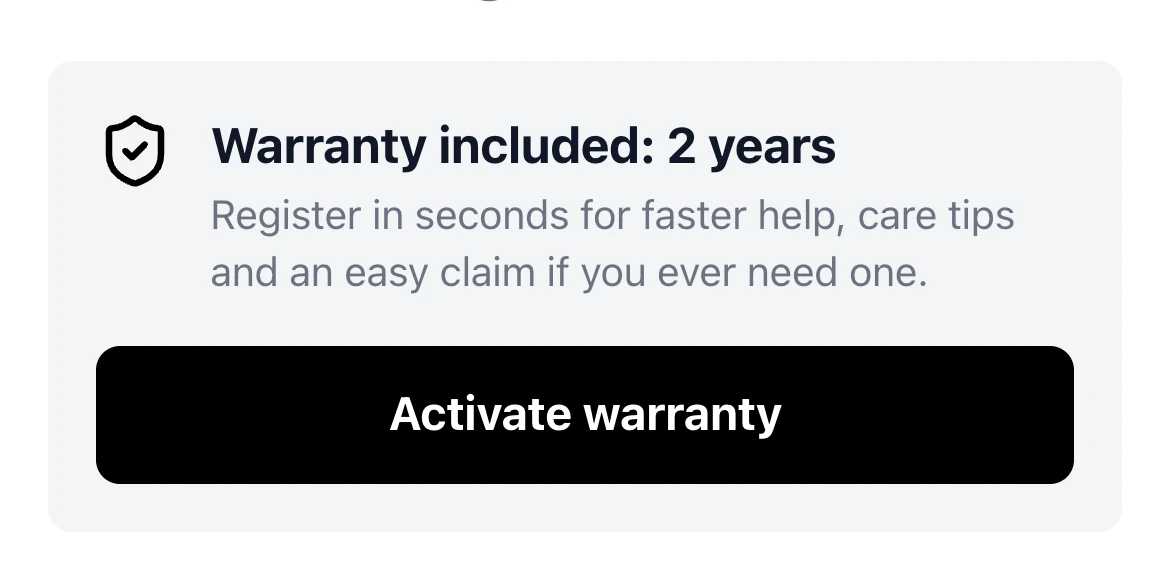
Warranty and registration
Brand's choiceA 2-year warranty the owner can register for, plus a claim form if something goes wrong.
Which rule: Not a passport requirement. The seller’s legal guarantee in the EU is at least 2 years anyway. Brands use the same page to know who owns the product and to handle claims.
The same passport for machines: the UN format
Authorities, retailers and recyclers don't read web pages, their systems do. The same passport is published as signed structured data in the UN Transparency Protocol format, with more detail than the shopper page shows.
{
  "type": ["DigitalProductPassport", "VerifiableCredential"],
  "issuer": { "id": "did:web:go.veribl.com:my-company-g4vkpz" },
  "issuingSoftware": { "name": "Veribl Digital Product Passports" },
  "credentialSubject": {
    "id": "https://go.veribl.com/01/09506000134369",
    "name": "Organic Cotton Crew Tee",
    "modelNumber": "UNTP-TEE-01",
    "idGranularity": "model",
    "productCategory": [{
      "code": "61091000",
      "schemeName": "EU Combined Nomenclature (CN)"
    }],
    "characteristics": {
      "careInstructions": "Machine wash at 30°C, do not tumble dry,
        iron on low heat",
      "countryWeaving": "Portugal",
      "countryDyeing": "Portugal"
    },
    "producedAtFacility": { "name": "Porto sewing plant (demo)" },
    "countryOfProduction": { "countryCode": "PT" },
    "materialProvenance": [
      {
        "name": "Organic cotton",
        "originCountry": { "countryCode": "IN" },
        "materialType": { "code": "5201" },
        "massFraction": 0.6
      },
      {
        "name": "Recycled polyester",
        "originCountry": { "countryCode": "TR" },
        "materialType": { "code": "5503" },
        "massFraction": 0.4,
        "recycledMassFraction": 0.4
      }
    ],
    "performanceClaim": [{ "name": "REACH Regulation (EC) 1907/2006" }]
  }
}- issuer
- Who issued the passport, as a web-based identifier (did:web). Anyone can check the signature against it.
- credentialSubject.id
- The product’s GS1 Digital Link: the same address the QR code on the label holds, built from its GTIN.
- productCategory
- The EU customs code, so systems know this is a knitted cotton T-shirt without reading the name.
- materialProvenance
- Each material with its origin country (India, Türkiye), its customs material code and its share by weight.
- producedAtFacility
- The factory, which links to its own signed facility record.
- performanceClaim
- Declarations and certificates, here the REACH declaration.
The passport is signed as a W3C Verifiable Credential, so anyone can check it hasn’t changed since it was published. It passed all six checks of the UN Transparency Protocol test service: see the test report. New to the format? Read what UNTP is.
Who can see what
For textiles, the EU hasn't set access rules yet. The delegated act will decide which data is public and which is only for authorities, repairers or recyclers. Until then the brand decides. In this example everything is public.
| Data | Example | Usually |
|---|---|---|
| Materials and recycled content | 60% organic cotton, 40% polyester | Public |
| Countries of production | Knitting, dyeing, sewing: Portugal | Public |
| Care, repair and end of life | Wash at 30°C, how to recycle | Public |
| Declarations and certificates | REACH, GOTS, GRS | Public |
| Named suppliers and exact factory details | Mill names, addresses | Often restricted |
| Test reports | Chemical and colourfastness lab reports | Often restricted |
Batteries are different: the Battery Regulation already sets three levels, data for everyone, for people with a legitimate interest such as repairers and recyclers, and for authorities only. See the battery passport requirements.
Scan it yourself
Point your phone camera at the code to open the live passport, or open it in your browser. It’s the same GS1 Digital Link a brand prints on the care label or hang tag.
Open the live passportTextile DPP example FAQ
Questions brands ask about textile digital product passports. Get in touch.
Turn every product into your best channel.
 4.8/5 on G2